
Hospitality Real Estate Inspection across Ohio, Indiana, and Kentucky

Hospitality Real Estate Inspection in the Midwest and Surrounding Regions
Hotels, motels, and resorts are living, breathing operations. Guests check in and out every day, staff work through the night, and every system in the building is under constant demand. When something goes wrong in a hospitality property, it rarely stays quiet for long. It shows up in guest complaints, negative reviews, and repair bills that arrive at the worst possible time.
A commercial real estate inspection puts a qualified set of eyes on every part of the property before ownership transfers. It tells you what's holding up well, what's been neglected, and what's going to need serious attention in the near future.
If you've been searching for “commercial real estate inspectors near me”, LiteHouse Commercial is the team hospitality buyers across Ohio, Indiana, and Kentucky trust to get the job done right
What we do?
Running a hotel or resort means managing an unusually wide range of spaces and systems under one roof. Guest rooms, commercial kitchens, pool equipment, laundry facilities, loading areas, and common spaces all function differently and age differently. An inspector who treats a hospitality property like a standard office building will miss things that matter.
At LiteHouse Commercial, we approach each commercial real estate inspection with a scope that reflects how these properties actually work. We evaluate each area based on its specific function, the volume of use it handles, and the standards it needs to meet. Our reports are written in plain language so ownership and investors can read through the findings and make decisions without needing a technical background to understand what they're looking at.
What We Offer
As your expert commercial inspector, we know that hospitality real estate is a 24/7, 365-day-a-year business. That's why we offer thorough commercial real estate inspections of every nook and cranny of your property, including:
- Guest Rooms and Suites
- Banquet Facilities and Exhibition Halls
- Public Lobbies and Communal Spaces
- In-room Kitchenettes and Shared Office Spaces
- Pools, Spas, and Workout Facilities
- Laundry Rooms and Public Restrooms
- Vending Areas and Commercial Kitchens
- Loading Docks, Parking lots, and Garages
- Landscaped grounds and Outdoor recreational Areas
Whether you need an inspection of the entire grounds or just a specific system (like HVAC, plumbing, or roofing), we've got you covered.
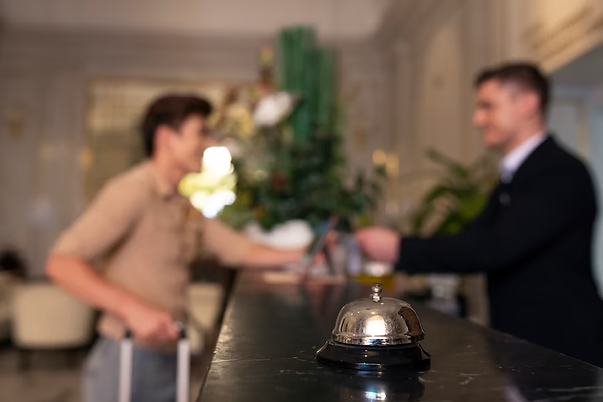
Why You Need It: Protect Your Investment and Keep Guests Happy
The high-traffic usage and wear and tear that hospitality real estate undergoes make those regular inspections a MUST for financial and safety reasons.
- Avoid costly surprises: Our inspection helps you identify those potential issues before they become major headaches, saving you money in the long run.
- Maximize profitability: When parts of your facility are vacant or out of commission, they become a financial liability. We help you prevent those scenarios, ensuring your property performs optimally and profitably.
- Ensure guest satisfaction: A well-maintained property keeps your guests happy and coming back for more.
- Customized scope of work: We understand the complexity of hospitality real estate, so we tailor our commercial real estate inspection to provide you with the most up-to-date information and top-notch service.
1
Visit the Property
Spend time at the property as a guest would. Check in during peak hours, walk the corridors at night, sit in the lobby during checkout time. You'll notice things that only reveal themselves when the building is actually in use, and those observations will help shape the focus of the inspection.
2
Outline Your Objectives
Every buyer comes to the table with different priorities. Some are focused on the age of the mechanical systems, others are more concerned about the guest room finishes or the condition of the pool area. Put your priorities in writing and send them to us ahead of time so we can orient the inspection around what genuinely counts for your transaction.
3
Obtain Information
Reach out to the current owner or operator for records specific to the property. Health department inspection reports, pool maintenance logs, equipment warranties, franchise compliance records, and any recent repair work are all worth requesting. The depth of documentation a seller provides often reflects how seriously they've taken care of the asset over the years.
4
Interviews and Questionnaires
Ask if the property manager or a senior staff member can be available on the day of the walkthrough. Having someone on site who has watched the building through different seasons and different levels of occupancy adds a layer of context that no document can fully capture.
5
Special Points of Interest
Think about what you're planning to do with the property after closing. If you're rebranding it, expanding it, or converting part of it to a different use, those plans affect what we focus on during the inspection. Letting us know your intentions early means the inspection is pointed in the right direction from the very first walkthrough.
How To Prepare for Your Hospitality Real Estate Inspection
Without any preparation means you'll likely come away with a report that answers questions you didn't ask, while the ones that actually matter to your deal go unaddressed. These five points cover what experienced buyers typically sort out to get the most value from the process.
Frequently Asked Questions
What does a hospitality real estate inspection cover?
It covers guest rooms, commercial kitchens, pools, spas, laundry rooms, lobbies, parking lots, loading docks, and outdoor areas. Every part of the property gets evaluated based on how it actually gets used.
Where does LiteHouse Commercial inspect hospitality properties?
LiteHouse Commercial covers hotels, motels, and resorts across Ohio, Indiana, and Kentucky, including Cincinnati, Dayton, Columbus, Indianapolis, Louisville, and Lexington.
Why do hotels and motels need commercial inspections?
Hospitality properties run 24 hours a day, every day. That level of use puts constant pressure on every system. Inspections catch small problems before they turn into expensive repairs or unhappy guests.
Can you inspect just one system in a hospitality property?
Yes. LiteHouse Commercial can focus on a specific area like HVAC, roofing, or plumbing if that is what your deal requires. The scope is built around what matters most to you.
What records should buyers request before a hospitality inspection?
Ask the seller for health department reports, pool maintenance logs, equipment warranties, franchise compliance records, and recent repair invoices. These help the inspector and give you a fuller picture of the property.
How is a hospitality inspection different from a standard commercial inspection?
Hotels and motels have spaces that most commercial buildings do not, like pools, commercial kitchens, and guest corridors that run around the clock. A hospitality inspection is scoped specifically for how those spaces function and the wear they take on.