When you're evaluating a commercial building, elevators are easy to overlook. They work, people use them, and as long as nobody's complaining, it's tempting to move on and focus on the roof or the HVAC.
But elevator and lift system assessment is one of the most important parts of a thorough property condition assessment. And skipping it, or treating it as a checkbox, can lead to some very expensive surprises.
Why Elevators Are a High-Stakes Building System
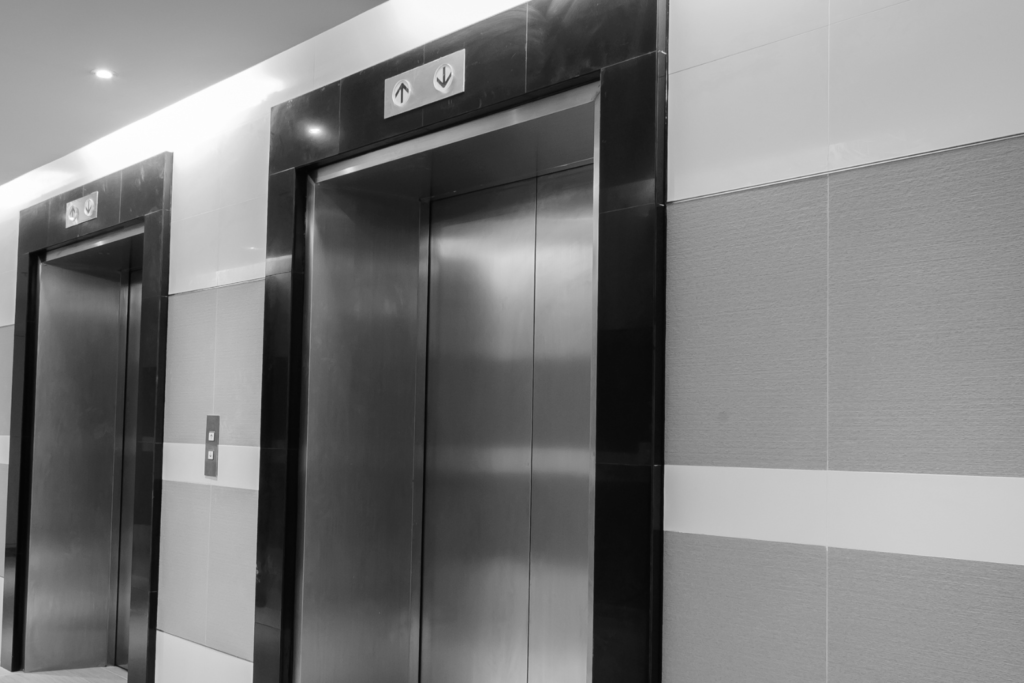
Elevators are vertical transportation systems, and they operate continuously under significant mechanical stress. In multi-story commercial buildings, they're used hundreds or thousands of times a day. The wear on cables, motors, brakes, control systems, and door mechanisms adds up fast.
Beyond the wear, elevator systems are subject to strict safety compliance requirements. In most U.S. states, elevators require regular third-party inspections and licensing. A non-compliant elevator can expose a building owner to significant liability, and in some cases, regulators can order the elevator taken out of service entirely.
All of this makes elevator systems a priority in any commercial elevator inspection or broader building condition assessment.
What a Thorough Elevator and Lift System Assessment Covers
A complete lift system evaluation looks at far more than just whether the elevator runs.
The mechanical components are the starting point. This includes the motor, cables, sheaves, counterweights, brakes, buffers, and the guide rails the cab travels on. These components have finite lifespans and failure modes that a trained assessor can identify before they become serious operational problems.
The control systems are equally important. Modern elevators run on sophisticated electronic controllers. Older systems may be using proprietary controls that are no longer supported, which means replacement parts are either scarce or unavailable. That's a significant capital expenditure planning consideration for any buyer or owner.
Door systems, including the door operators, interlocks, and sensors, are among the highest-maintenance components on any elevator. They're also among the most common sources of entrapment incidents when they malfunction.
The machine room, the pit at the base of the shaft, and the overhead space at the top of the shaft are all part of a complete assessment too. Assessors look for evidence of water intrusion, improper clearances, code violations, and deferred maintenance that could indicate how well the system has been cared for over time.
Why Maintenance Records Matter as Much as the Physical Inspection
A visual inspection tells you what the system looks like today. Maintenance records tell you how it got there.
A well-documented elevator maintenance history shows regular lubrication, part replacements, code updates, and third-party inspection compliance. A system with no records, or spotty records, raises immediate questions. Was routine maintenance skipped? Were issues identified and ignored? Were repairs done properly or patched together?
During a property condition assessment for elevators, reviewing maintenance documentation is standard practice at LiteHouse Commercial. Gaps in that paperwork often point to deferred maintenance that isn't yet visible but is coming.
How Equipment Lifespan and Modernization Planning Factor In
Most elevator components have expected service lives. Hydraulic systems typically last 20 to 25 years. Traction elevator components vary but controllers and motors can exceed 30 years with proper care. The cab interior is often the first thing to be updated, but cosmetic upgrades don't tell you anything about the mechanical health of the system underneath.
When an assessor identifies components that are approaching the end of their expected lifespan, that feeds directly into capital expenditure planning for the property. A buyer needs to know if they're looking at a $40,000 controller replacement in two years or a full system modernization at $150,000 or more within five.
That's not just maintenance information. That's deal-critical financial data.
Modernization: What It Means and When It Becomes Necessary
Elevator modernization isn't always about replacing the entire unit. In many cases it involves upgrading specific components like the controller, drive system, door operators, or cab finishes while keeping the existing shaft and structural elements.
Modernization becomes necessary when parts are no longer available, when energy consumption is significantly higher than current standards, when safety code compliance requires upgrades, or when the system's operational performance is creating tenant complaints.
An elevator and lift system assessment will flag when a system is approaching modernization territory. That flag can be used as a negotiating point during acquisition, or as a planning anchor for ownership.
What Assessors Look for in Older Elevator Systems
Older systems present specific risks that a building systems inspection needs to address directly.
Hydraulic elevators installed before the mid-1990s may have single-bottom cylinders that can corrode and leak underground, contaminating soil. This is a known environmental liability. Single-bottom cylinder elevators have been phased out in most modern installations but still exist in older commercial buildings.
Older traction systems may use relay-based controls that are decades past their engineering support lifecycle. Finding qualified technicians to service them is increasingly difficult and expensive. And if a relay fails, getting parts can involve waiting months for a custom rebuild.
These aren't hypothetical concerns. They're the kind of findings that a qualified assessor documents specifically because they carry real cost and risk.
Why Operational Performance Tells You More Than Appearance
An elevator can look completely fine and still be performing poorly. Slow response times, uneven leveling at floor stops, excessive noise, and inconsistent door timing are all signs of underlying issues that affect both tenant experience and long-term repair costs.
A proper lift system evaluation includes observing the elevator in operation, not just inspecting it stationary. That operational review often catches things that a purely visual inspection won't, including control system irregularities, motor performance issues, and brake response timing.
What LiteHouse Commercial Includes in Every Elevator Assessment
At LiteHouse Commercial, our property condition assessments treat elevator and lift systems as a primary building system, not an afterthought. We review mechanical components, control systems, door hardware, machine room conditions, maintenance records, code compliance status, and remaining useful life estimates for major components.
Where we identify deferred maintenance, approaching end-of-life components, or code compliance concerns, we document them clearly with repair cost ranges and priority classification. Our reports give property owners, buyers, and lenders an honest picture of what the system is actually worth maintaining, what it will cost, and when.
FAQs
Why are elevator systems included in property assessments?
Elevators are major mechanical systems with significant maintenance costs, safety compliance requirements, and defined component lifespans. In a commercial property condition assessment, elevator systems represent a potential capital expenditure that can range from tens of thousands to several hundred thousand dollars depending on the age and condition of the system. Including elevators in the assessment gives buyers and owners accurate financial data for budgeting and negotiation.
What elevator components are typically inspected?
A thorough elevator and lift system assessment covers the motor, cables, sheaves, counterweights, brakes, buffers, guide rails, control systems, door operators, interlocks, sensors, machine room conditions, pit conditions, and overhead clearances. Maintenance records and third-party inspection compliance documentation are also reviewed as part of the overall evaluation.
Can an assessment identify future repair costs?
Yes. One of the primary goals of a property condition assessment for elevators is to estimate remaining useful life for major components and forecast likely capital expenditures. An assessor can identify components approaching end of life, flag deferred maintenance, and provide repair or replacement cost ranges that buyers and owners can use for financial planning and due diligence purposes.
How often should elevator systems be evaluated?
For ongoing ownership, elevator systems should be maintained under a regular service contract and inspected by a licensed third party on whatever schedule your jurisdiction requires, typically annually. For acquisition due diligence, a property condition assessment should include elevator evaluation regardless of when the last inspection occurred, because maintenance quality and documentation gaps are often only visible through a comprehensive review.
What risks can aging elevator systems create?
Older elevator systems can create several categories of risk. Safety compliance risk arises when systems no longer meet current code requirements. Operational risk comes from component failures that take the elevator out of service, which directly affects tenant satisfaction and lease value. Financial risk comes from unplanned capital expenditures for major repairs or full modernization. In some cases, older hydraulic systems also present environmental liability from underground cylinder corrosion and fluid leaks.