Buying commercial property is one of the biggest financial moves you’ll make. Skipping the inspection to save time or money is how people end up with expensive regrets.
At LiteHouse Commercial, we’ve inspected buildings across Cincinnati and Dayton for owners, investors, and business buyers who wanted certainty before signing on the dotted line. This guide walks you through everything a commercial property inspection covers and why it matters for your bottom line.
What Is a Commercial Property Inspection?
A commercial property inspection is a professional evaluation of a building’s structure, systems, and overall condition. It’s different from a residential inspection because commercial buildings involve more complex systems and higher stakes.
We assess everything from the roof down to the electrical panel. The goal is simple: give you an honest picture of what you’re buying before you commit real money.
Why Property Due Diligence Protects Your Investment
Due diligence isn’t just paperwork. It’s the process that keeps buyers from inheriting someone else’s problems.
According to CBRE research on commercial real estate transactions, undisclosed property defects remain one of the top causes of post-closing disputes. A detailed inspection during due diligence catches these issues while you still have negotiating power.
We treat every inspection as part of your due diligence toolkit, not just a formality to check off your list.
Pre-Purchase Inspection: What Happens Before You Buy
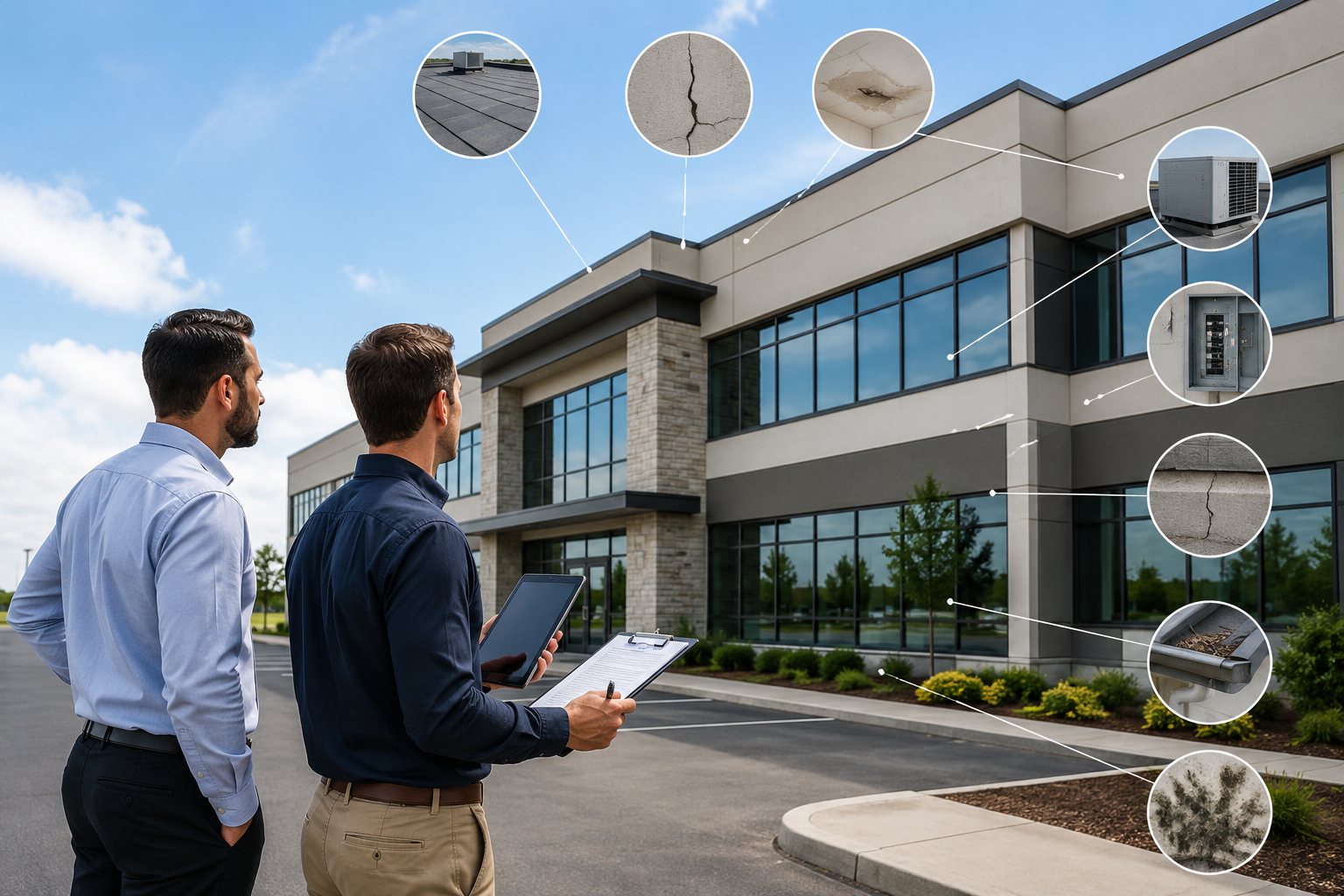
Before you finalize a purchase, we walk the entire property and test every major system. This includes structural components, HVAC, electrical, plumbing, and roofing.
Timing matters here. We recommend scheduling your pre-purchase property inspection as soon as your offer is accepted, so you have enough time to review findings before your inspection contingency expires.
Common Commercial Property Risks We Uncover
Some risks are obvious, like a sagging roofline. Others hide in plain sight, like an electrical panel that’s overloaded but still functioning.
We regularly find aging HVAC systems near failure, plumbing leaks behind walls, and code violations left over from previous renovations. These issues rarely show up on a basic walkthrough, but they show up clearly in our reports.
Building Systems Assessment: What Gets Tested
Our building systems assessment covers four major areas: structural integrity, mechanical systems, electrical capacity, and plumbing condition. Each system gets tested individually, not just glanced at.
We also check life safety systems like fire alarms, sprinklers, and emergency exits. These systems protect the people who will work inside the building every day.
Investment Property Evaluation: Planning Beyond the Purchase
Smart investors don’t just want to know if a building passes inspection. They want to know what it will cost to maintain over the next 5 to 10 years.
Our reports include a maintenance outlook, so you can budget for major repairs like roof replacement or HVAC upgrades ahead of time. This turns your inspection into a long-term investment property evaluation, not just a pass or fail checklist.
Property Maintenance Planning After You Close
The inspection doesn’t stop mattering once you own the building. We give you a prioritized list of maintenance issues identification, so you know what to fix first.
This helps property owners avoid the trap of reactive maintenance, where small problems turn into expensive emergencies. Planning ahead saves money every single time.
How LiteHouse Commercial Supports Smarter Real Estate Decisions
We built our inspection process around one goal: helping you make confident, informed decisions with honest and quality commercial property inspection. Every report we deliver is written in plain language, backed by photos, and organized by priority.
We strive to make sure you know exactly what you’re buying, so there are no surprises six months down the road.
If you’re evaluating a property in Cincinnati or Dayton, we’d love to walk it with you and give you the clarity you need before you sign.
Frequently Asked Questions
What’s the difference between a commercial and residential property inspection?
Commercial property inspections cover more complex systems, larger square footage, and stricter code requirements than residential inspections. They often take longer and require inspectors with specialized training in commercial HVAC, electrical, and structural systems.
When should I schedule a commercial property inspection?
Schedule your inspection as soon as your purchase offer is accepted and before your inspection contingency period ends. This timing gives you enough room to review findings and negotiate repairs before your deadline passes.
What documents should I bring to the commercial property inspection?
Bring any available maintenance records, past inspection reports, permits, and warranty information for major systems. These documents help our inspectors understand the building’s history and identify recurring issues faster.
Will the property inspection report include cost estimates for repairs?
Yes, our reports include estimated repair costs for major findings, so you can budget accurately before closing. This helps you decide whether to negotiate the price, request seller repairs, or move forward as is.
Can I attend the commercial property inspection in person?
Yes, we encourage buyers to walk the property with our inspector whenever possible. Being there in person lets you ask questions in real time and see issues firsthand instead of just reading about them later.