Buying commercial property is one of the biggest financial decisions an investor makes. The building might look great from the parking lot, but appearances hide a lot. Commercial real estate inspections exist to protect you from that gap between what you see and what you actually get.
At LiteHouse Commercial, we work with investors who understand that skipping due diligence isn’t saving money, it’s gambling with it. Here’s exactly how a thorough commercial real estate inspection reduces your investment risk before you sign anything.
Why Does Skipping an Inspection Put Your Investment at Risk?
Buying without a full inspection means relying on assumptions instead of facts. Sellers aren’t always aware of hidden issues themselves, and even well-maintained buildings carry aging systems that aren’t visible during a casual walkthrough. That gap in knowledge becomes your financial risk the moment you close.
Deferred maintenance is one of the leading causes of unexpected capital expenses in commercial real estate. A proper inspection closes that knowledge gap before you’re financially committed.
Inspections Uncover Hidden Deferred Maintenance
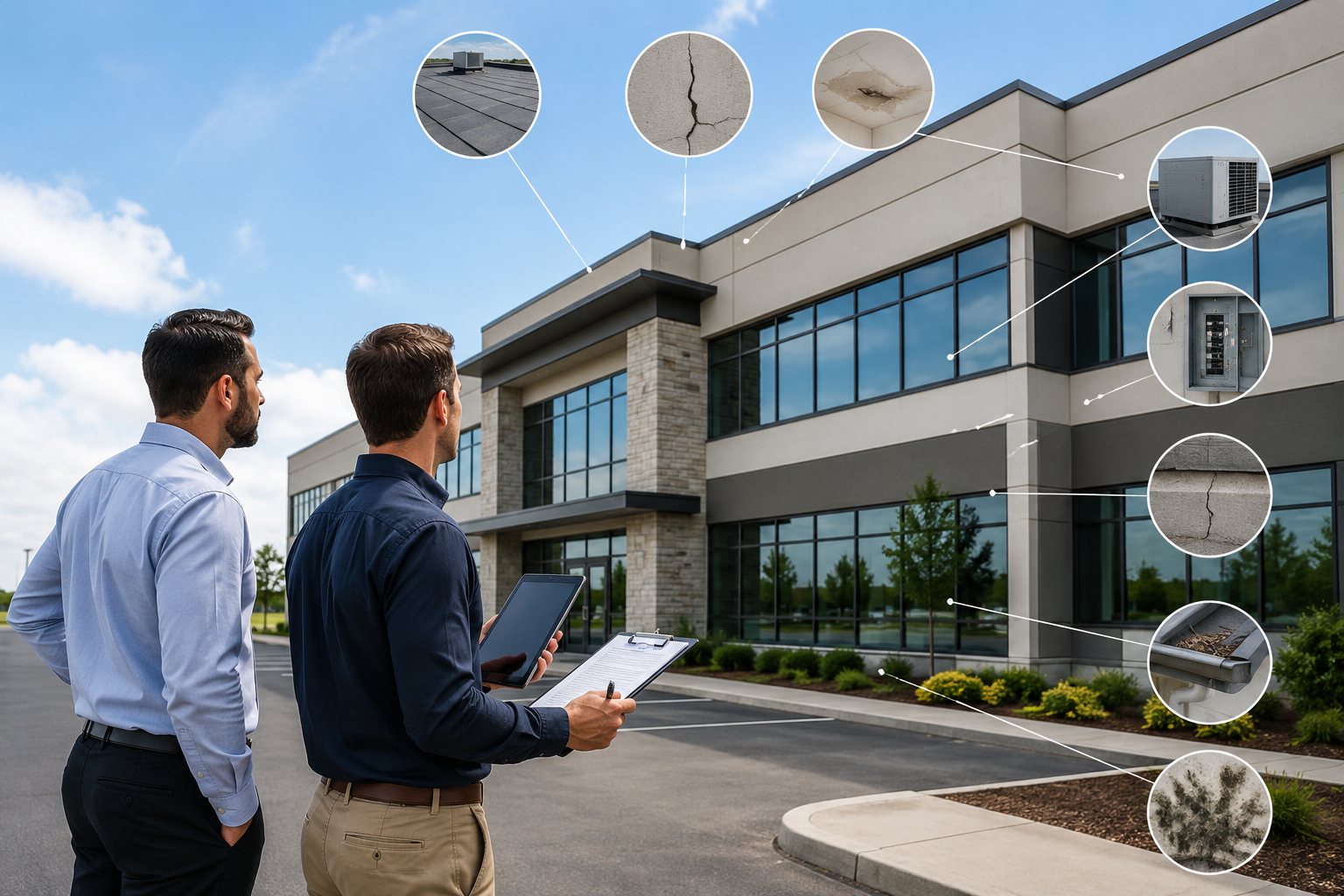
Deferred maintenance often hides behind fresh paint and clean landscaping. Inspectors look past surface appearances to assess actual system condition, from roof membrane wear to aging electrical panels. This is where experience matters most, since untrained eyes miss warning signs constantly.
Uncovering deferred maintenance before purchase gives you real negotiating power. You can request repairs, price adjustments, or walk away entirely if the numbers no longer make sense for your investment goals.
Structural Findings Affect Your Long-Term Financial Planning
Structural integrity issues represent the highest-risk category in any commercial property evaluation. Foundation cracks, water intrusion at load-bearing points, and settling issues can cost hundreds of thousands of dollars to correct if discovered after purchase. These aren’t repairs you can put off indefinitely.
Knowing structural condition upfront lets you build accurate financial projections. Investors who skip this step often face capital expenditure surprises that erase years of projected returns almost overnight.
Inspection Data Play in Accurate Property Valuation
Property valuation depends heavily on system condition, not just location and square footage. A building with aging HVAC, roofing, and electrical systems carries hidden costs that directly affect its true value. Inspection data gives you the real numbers behind the asking price.
We’ve seen investors adjust offers by significant margins after reviewing detailed inspection findings. That adjustment often reflects tens of thousands of dollars in near-term capital needs the listing price never accounted for.
Inspection Data Support Better Lease Negotiations
Understanding a building’s true condition strengthens your position during lease negotiations with tenants. You can accurately represent system age and maintenance history, building trust with commercial tenants who care about facility reliability. This transparency also protects you from disputes down the road.
Tenants increasingly request condition documentation before signing longer leases. Having detailed inspection records ready speeds up negotiations and positions you as a credible, well-prepared landlord.
Inspection Helps Forecast Future Capital Expenditures
A thorough inspection report includes estimated remaining lifespan for major building systems. This data lets investors forecast capital expenditure needs years in advance instead of reacting to sudden failures. Planning ahead protects cash flow and prevents scrambling for emergency financing.
We build our reports specifically to support this kind of long-term planning. Knowing your roof needs replacement in five years, not fifty, changes how you budget every single year until then.
Experienced Investors Treat Inspections as Risk Management, Not Just Compliance
Experienced investors understand inspections go far beyond satisfying lender requirements. They treat inspection findings as a core input into their financial models, adjusting purchase price, reserve funds, and renovation timelines based on actual data. This mindset separates seasoned investors from first-time buyers.
Treating inspections as risk management rather than a checkbox protects returns over the entire holding period. It’s the difference between reacting to problems and planning around them confidently.
We built our inspection process around what investors actually need: clear data, honest findings, and reports that support real financial decisions. We don’t just tell you what’s wrong. We help you understand what it means for your investment strategy going forward.
Contact LiteHouse Commercial today to schedule a commercial real estate inspection and protect your next investment from costly surprises.
Frequently Asked Questions
Can commercial real estate inspections affect financing or loan approval?
Yes, many lenders require a commercial property inspection before approving financing for a purchase. Inspection findings can influence loan terms, required reserves, or conditions attached to approval. A clean report often streamlines the lending process, while significant findings may require addressing issues before funding proceeds.
How do inspections differ between different types of commercial properties?
Inspection scope varies based on property type, since a retail space, warehouse, and office building each involve different systems and usage demands. Warehouses focus heavily on structural loading and roof condition, while office buildings emphasize HVAC and electrical capacity for higher occupant density and equipment use.
Should investors get a new inspection even if the seller provides one?
Yes, investors should commission an independent inspection even when sellers provide their own report. Seller-provided inspections may not reflect current conditions or could carry bias toward a favorable outcome. An independent assessment protects your specific financial interests and provides unbiased, buyer-focused findings.
How does inspection data influence a property’s insurance premiums?
Insurance providers often use inspection findings to assess risk and determine premium pricing for commercial properties. Buildings with documented maintenance issues or outdated systems may face higher premiums or coverage restrictions. A clean inspection report can support better insurance terms and lower ongoing operational costs.
What happens if a commercial inspection reveals major issues after an offer is accepted?
If significant issues surface after an offer is accepted, buyers typically have contractual options like renegotiating price, requesting repairs, or exercising a due diligence exit clause. Most commercial purchase agreements include contingency periods specifically designed to protect buyers from unexpected findings during the inspection process.