Moisture intrusion in commercial buildings is one of the most common and most costly findings during property inspections. It does not announce itself.
It works quietly behind ceiling tiles, inside wall cavities, and beneath roof membranes. By the time it becomes visible inside a building, the damage is almost always worse than it looks.
This blog covers exactly where water gets in, through flat roof failures and wall assembly failures, and what the warning signs look like so you know what to take seriously.
Why Flat Roofs Are Where Most Commercial Water Problems Start
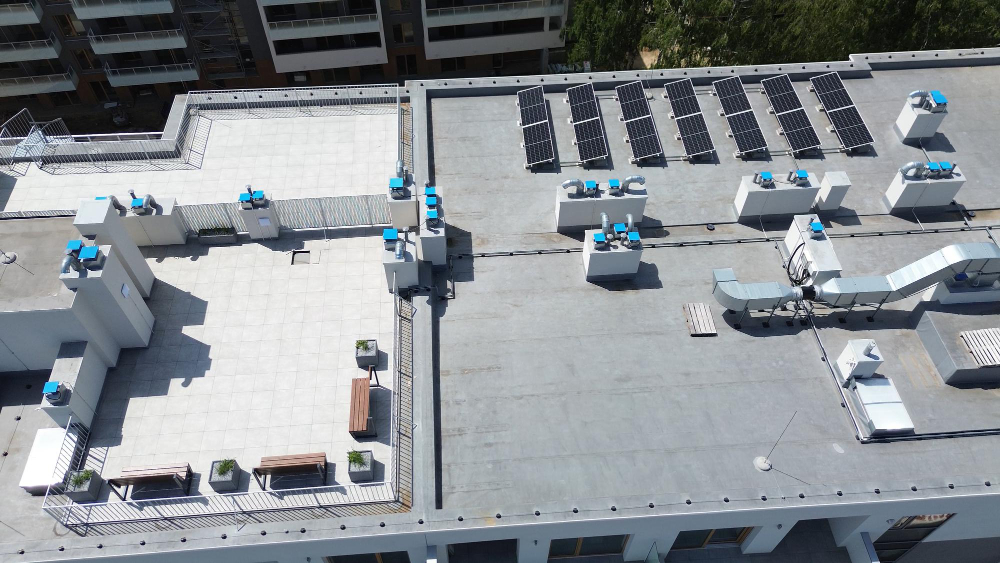
The majority of commercial buildings use flat or low-slope roofing systems. Retail centers, office buildings, warehouses, all of them. They are practical and cost-effective.
But they depend entirely on proper drainage and a functioning membrane to keep water out. When either of those breaks down, water finds a way in.
Membrane Deterioration
The membrane is the waterproofing layer of a flat roof. Most use TPO, EPDM, or modified bitumen. These materials work well with maintenance, but they age. UV exposure makes them brittle. Foot traffic from maintenance crews creates punctures. Seams separate gradually from years of thermal movement.
Flat roof membrane deterioration rarely fails all at once. It develops small vulnerabilities, water gets beneath the surface, spreads across the roof deck, and eventually finds a path down into the building. By the time a ceiling tile stains, that water has already been traveling for a while.
Failed Flashing Details
Most people assume roof leaks start in the middle of the roof somewhere. In reality, the majority of flat roof water intrusion in commercial buildings starts at flashing details.
Flashing seals every transition on a roof. Around HVAC units, at drain openings, along parapet walls, at every pipe penetration. These are the most vulnerable points on any flat roof. Flashings pull away from walls as buildings shift slightly. They crack from UV exposure. They fail at their edges.
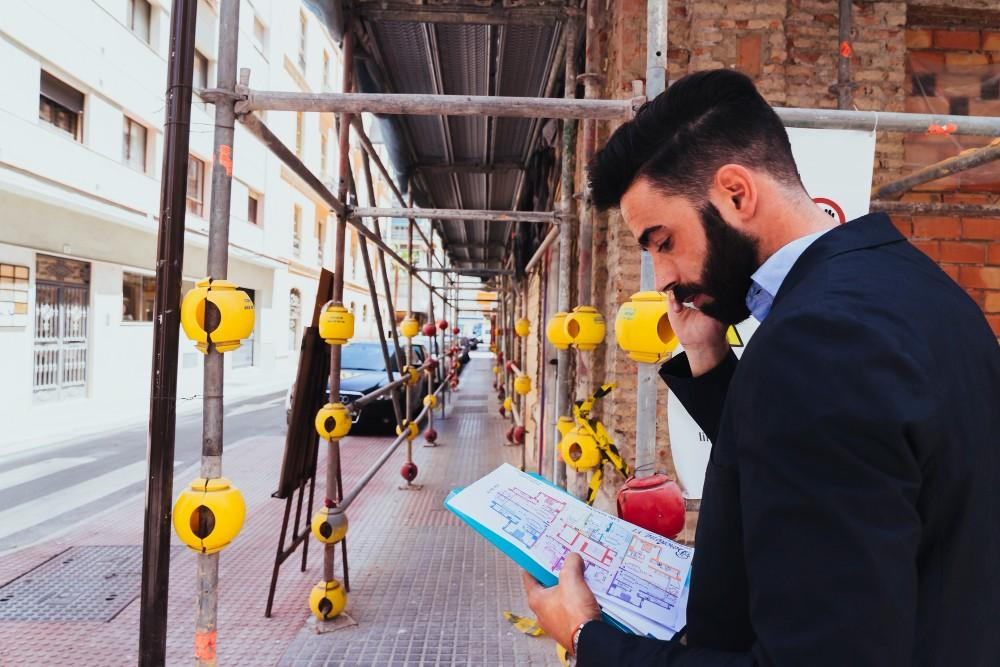
During any proper commercial flat roof leak inspection, flashing conditions get specific attention because this is consistently where problems begin.
Ponding Water
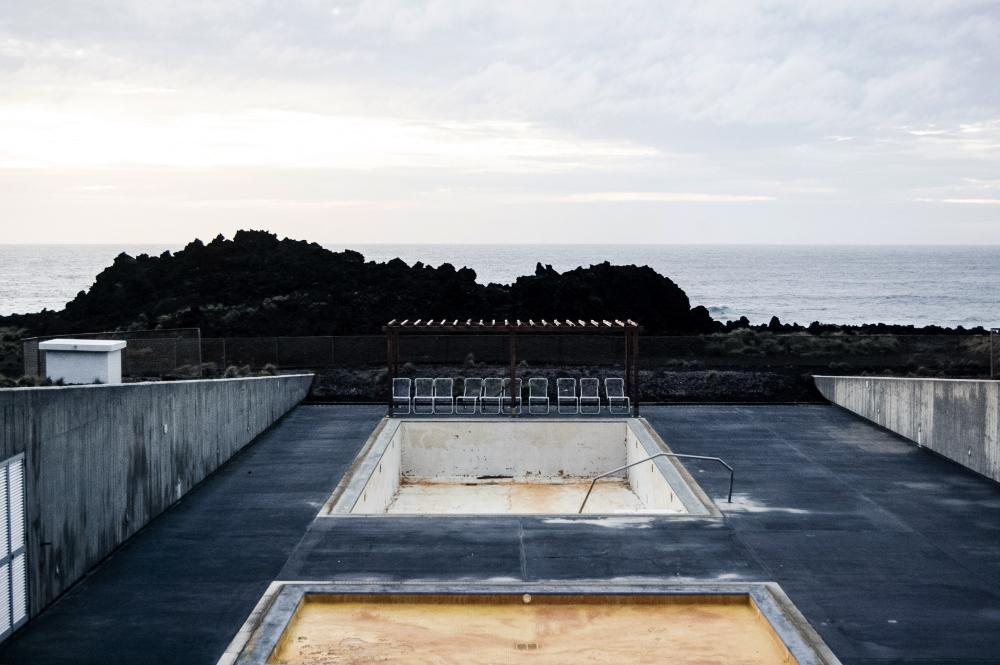
A properly designed flat roof should drain within 48 hours of rain. If water is sitting longer than that, there is a problem.
Standing water adds structural load to the roof deck. More importantly, it accelerates membrane breakdown significantly. The areas where water ponds consistently are almost always the first places the membrane fails. Ponding happens when drains clog, when the roof surface has settled unevenly, or when the drainage design was inadequate from the start.
Parapet Walls and Coping Cap Failures
The short perimeter walls on flat-roof commercial buildings are called parapets. The caps running along the top are coping. When coping caps crack or lose their sealant at the joints, water enters the top of the parapet wall and travels down inside the wall assembly, completely bypassing the roof membrane.
Parapet wall water intrusion is particularly hard to trace because the entry point and the visible damage are often in completely different locations.
Wall Assembly Failures Are Just as Serious
Commercial building wall assembly failures do not get as much attention as roof problems, but they cause just as much damage.
Window and Storefront Leaks
Commercial windows and storefront systems have drainage channels and sealed perimeters for exactly this reason. When sealant joints age and crack, or when the original installation has gaps, water enters the wall assembly right at the window perimeter.
The damage shows up as staining on interior walls near windows, discolored ceiling tiles close to exterior walls, or bubbling paint on interior surfaces. Behind those subtle signs, the wall assembly is often heavily saturated.
Masonry Walls and Mortar Deterioration
Brick and masonry walls are not waterproof by design. They rely on intact mortar joints and internal drainage to manage moisture. When mortar joints deteriorate, water gets in and has nowhere to drain properly.
The visible sign is efflorescence, the white chalky staining on older brick surfaces. That residue is left behind by water moving through the masonry. It is not cosmetic. It is evidence of a consistent moisture intrusion pattern inside the wall assembly and deserves a closer look every time.
Vapor Barrier Problems
Commercial wall assemblies include vapor barriers to stop warm, moist air from reaching cold surfaces inside the wall. When those barriers are missing, installed on the wrong side of the insulation, or damaged, condensation builds up inside the wall cavity continuously.
This is especially common in industrial buildings where the temperature difference between inside and outside is significant. That moisture feeds mold growth, degrades insulation, and in metal-framed walls, corrodes the framing itself.
Signs You Can Spot without Any Equipment
Water staining or discoloration on ceiling tiles, especially near exterior walls. Peeling or bubbling paint on interior walls near windows. A persistent musty smell in any section of the building. White chalky staining on exterior brick. Rust streaks running down exterior walls from metal flashings or fasteners.
None of these alone are a definitive diagnosis. But any of them is a reason to make sure a proper building envelope evaluation is part of your inspection before moving forward.
The Bottom Line
Water finds every weakness in a building, and it never stops. At LiteHouse Commercial, we know exactly where to look and what to look for.
Our commercial property inspections catch flat roof failures, wall assembly moisture problems, and hidden water damage before they become the most expensive mistake you ever made.
Frequently Asked Questions
Q1. A seller says the flat roof was recoated two years ago. Is moisture intrusion still a concern?
Yes. A recoat addresses the membrane surface but does not fix underlying drainage issues, failed flashing details, or damage to the roof deck that already existed. It also does not address parapet walls or coping conditions. A recoat is a maintenance measure, not a comprehensive solution. Each component still needs to be evaluated independently.
Q2. How serious is efflorescence on the exterior brick of a commercial building?
It means water has been consistently moving through the masonry. Whether that rises to a serious level depends on how extensive it is and whether the mortar joints and drainage details are still intact. It should always be flagged for closer evaluation during a commercial property inspection rather than dismissed as a cosmetic issue.
Q3. Can moisture trapped inside wall assemblies affect the health of people working in the building?
Yes. When moisture stays trapped inside wall cavities long enough, mold follows. Mold spores can enter the building's air supply through gaps in the wall or through the HVAC system. For commercial office buildings and retail spaces with regular occupancy, this is both a health concern and a liability issue for the building owner, not just a repair cost question.