You spotted a promising commercial property. The location looks solid. The numbers feel right. But something in the back of your mind keeps asking: what am I missing? That feeling is not paranoia. That is smart investing.
Commercial property inspection in Cincinnati gives you one of the clearest windows into the physical risks tied to any property. But physical condition is just one piece of the full picture.
This blog walks you through the
key risk categories every investor needs to understand before putting money into commercial real estate.
Here is what we will cover:
- Market and location risks
- Physical and structural risks
- Tenant and vacancy risks
- Financial and ROI risks
- Legal, zoning, and compliance risks
- Environmental risks
Why Risk Analysis Belongs at the Front of Every Deal
A lot of investors treat risk assessment as a late-stage step. Something you do after you have already fallen in love with the property. That is backwards.
Commercial property risk analysis belongs at the very beginning of your evaluation process. Before you run the financials. Before you tour the building. Before you get attached to the idea of what this property could be.
When you identify risks early, you negotiate better. You price deals more accurately. You avoid the surprises that drain returns and kill timelines.
In a market like Cincinnati, where commercial real estate ranges from revitalized downtown corridors to suburban industrial parks and everything in between, understanding the specific risks tied to each property type and location makes a real difference.
Market and Location Risks
The neighborhood matters as much as the building. A well-maintained property in a declining trade area will struggle to hold its value. A modest building in a high-demand corridor can outperform projections for years.
Here is what to assess when evaluating market and location risk:
Supply and demand balance – How much similar commercial space sits vacant in the same submarket? High vacancy rates signal weak demand or oversupply. Both hurt your returns.
Economic drivers – What industries and employers support the local economy? Cincinnati has a diverse base including healthcare, manufacturing, professional services, and logistics. Properties tied to growing sectors carry less risk than those dependent on a single employer or shrinking industry.
Infrastructure and access – Proximity to highways, public transit, and major arterials affects the value and tenant appeal of commercial properties. Properties near I-71, I-75, or the I-275 loop tend to attract stronger interest from logistics and retail tenants.
Neighborhood trajectory – Is the area improving, holding steady, or declining? Review recent sales, new development activity, and city investment patterns. Areas like Over-the-Rhine and parts of the West End have seen significant reinvestment. Other pockets require more caution.
Property market volatility – The volatility of property can shift quickly at the local level. What looks stable today may face pressure from new development or shifting tenant demand within a few years.
Physical and Structural Risks
This is where
commercial property inspection in Cincinnati directly protects your investment.
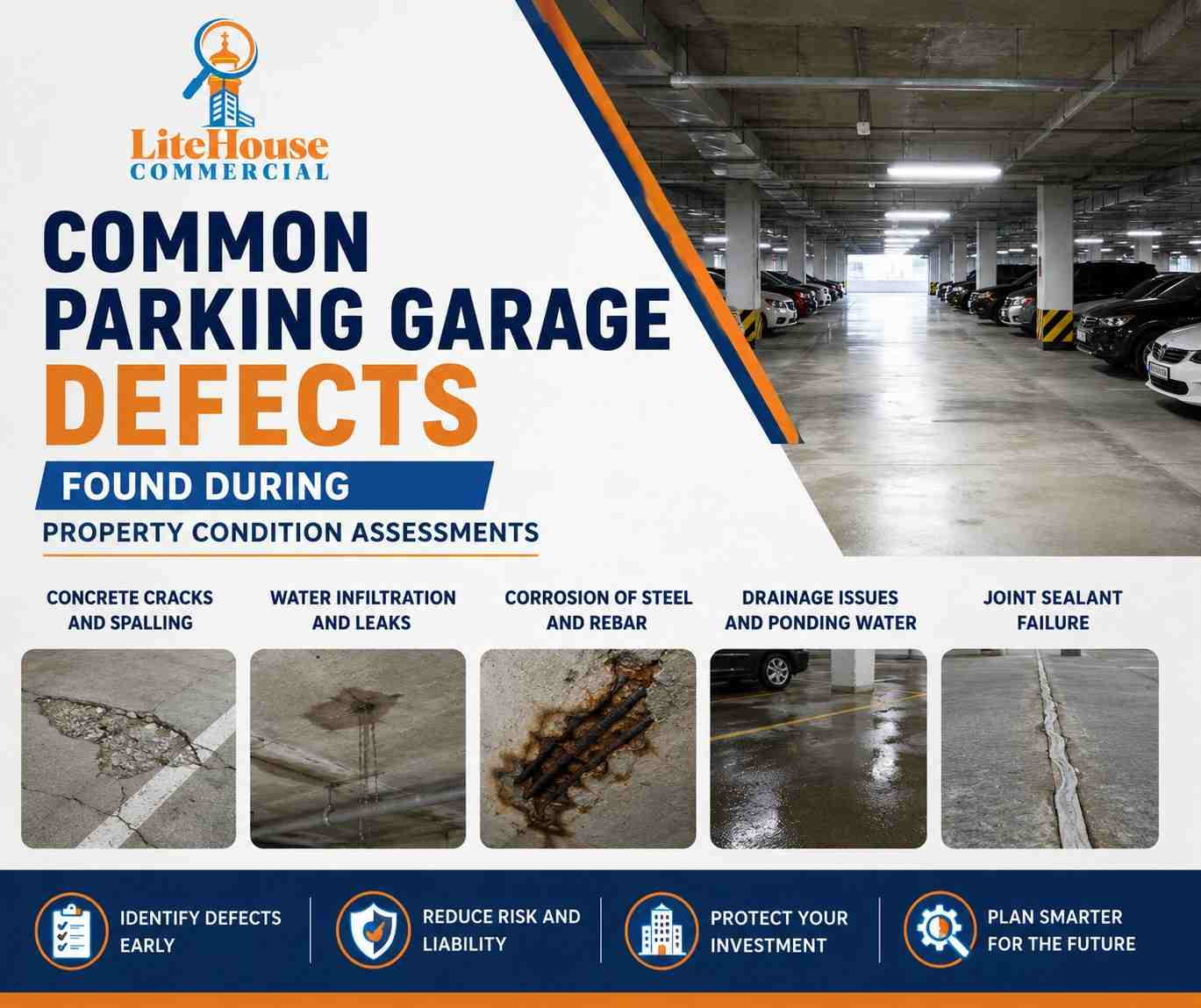
Physical risk is one of the most controllable categories in real estate investing. You cannot control the market but you can absolutely find out the condition of a roof, a foundation, or an HVAC system before you close.
Here is what physical risk looks like in practice:
Deferred maintenance – Sellers sometimes let maintenance slide for years before listing a property. Accumulated deferred maintenance shows up in the inspection report as a long list of items that need immediate or near-term attention. Each item carries a cost.
Aging building systems – A 25-year-old HVAC system, an electrical panel that predates current code, or a plumbing system with aging cast iron pipes all represent near-term capital expenditure risk. Know the ages and conditions of every major system.
Structural concerns – Foundation cracks, evidence of movement, water intrusion at the base of walls, or compromised load-bearing elements are serious findings. Some are manageable with proper repair. Others indicate deeper problems that require a structural engineer's review.
Roof condition – Roof replacement on a large commercial building runs into six figures. Know the age, material, and remaining useful life of every roof on the property.
Environmental hazards – Older Cincinnati buildings may contain asbestos, lead paint, or other hazardous materials. These add remediation costs and complicate future renovations.
LiteHouse Services Group LLC conducts thorough
commercial property inspections across Cincinnati and surrounding communities. Their reports document physical conditions clearly so you can attach real costs to physical risk.
Tenant and Vacancy Risks
Empty space does not pay the mortgage.
Tenant vacancy risk is one of the most significant financial risks in commercial real estate. It is often underestimated by first-time commercial investors who focus more on the building than the income stream.
Here is what to evaluate:
Current tenant quality – Who are the existing tenants? Review their financial health, lease terms, and payment history. A single anchor tenant with a strong balance sheet is very different from multiple small tenants with month-to-month leases.
Lease expiration schedule – When do existing leases end? A property with multiple leases expiring in the same year carries concentrated rollover risk. You could face a significant drop in occupancy all at once.
Tenant concentration – If one tenant generates 60 percent or more of your rental income, their departure or financial trouble directly threatens your returns. Diversified tenant bases reduce this exposure.
Market lease rates – Are current tenants paying above or below current market rates? Above-market leases will reset at renewal. Below-market leases represent upside but can indicate tenant financial stress.
Vacancy history – A property with a pattern of frequent vacancies tells you something. High turnover often points to location challenges, building condition issues, or management problems. Investigate before you assume it will change.
Financial and ROI Risks
Every investment promises a return. The risks lie in whether that return actually materializes.
Property ROI evaluation – It requires you to look beyond the proforma and stress-test your assumptions.
Cap rate sensitivity – Cap rates move with the market. A property you buy at a 6.5 cap rate today could see its market value drop significantly if rates in your submarket compress or expand by even 50 basis points.
Financing risk – Commercial loans typically carry shorter terms and higher rates than residential mortgages. Know your refinancing exposure. If your loan matures in five years, you need a clear plan for what that looks like under different interest rate scenarios.
Operating cost assumptions – Proformas often understate operating costs. Insurance, property taxes, maintenance, management fees, and capital reserves add up. Use actual historical costs from the seller, not projections, whenever possible.
Capital expenditure reserve – Set aside a realistic reserve for near-term repairs and replacements. If your inspection report identifies a roof replacement in year two and an HVAC overhaul in year three, those costs belong in your financial model from day one.
Real estate investment risks – These are tied to returns are almost always easier to manage when you build conservative assumptions into your initial analysis.
Legal, Zoning, and Compliance Risks
These risks often stay invisible until they become expensive problems.
Zoning compliance – Confirm that the property's current use aligns with Cincinnati's zoning designation for that parcel. Zoning variances or non-conforming uses carry risk if the city ever requires compliance.
Permit history – Pull the permit history. Unpermitted renovations or additions can require costly remediation or removal. They can also delay future permitting for your own improvements.
Title issues – Liens, easements, deed restrictions, and ownership disputes can all cloud your title and limit what you can do with the property. A full title search before closing catches these issues when you can still address them.
ADA compliance – Commercial properties must meet Americans with Disabilities Act requirements. Non-compliant properties carry both legal exposure and capital improvement costs to bring them into compliance.
Environmental liability – Phase I and Phase II environmental assessments identify contamination risks that carry significant remediation costs and potential legal liability. Never skip environmental review on older or industrial properties.
How We Help Cincinnati Investors Manage Risk
Risk management in commercial real estate starts with information. The more you know about what you are buying, the better your decisions become.
Commercial
property inspection in Cincinnati from LiteHouse Services Group LLC gives investors, developers, and acquisition teams a complete picture of the physical condition of any commercial property.
Our inspectors cover the full Cincinnati metro area including downtown, Blue Ash, Kenwood, Hyde Park, Milford, West Chester, and beyond. We inspect office buildings, retail centers, industrial properties, warehouses, and multi-family assets.
Every LiteHouse report documents findings clearly with supporting photos, condition ratings, and plain-language explanations. You do not need a construction background to understand what you are reading.
When you bring LiteHouse into your due diligence process early, you catch physical risks before they become negotiating surprises. You understand the true capital expenditure picture. And you move forward with the confidence that comes from knowing what you actually own.
Frequently Asked Questions
Q: How does interest rate risk affect commercial property values in Cincinnati?
A: Rising interest rates increase borrowing costs and compress property values by pushing cap rates higher. In Cincinnati's market, which includes a mix of stable income-producing properties and value-add opportunities, rising rates hit highly leveraged deals hardest. Properties with strong, long-term leases in place tend to hold value better in rising rate environments than vacant or short-lease buildings.
Q: What is the difference between market risk and asset-specific risk in real estate?
A: Market risk affects all properties in a given area or sector. A regional economic downturn, rising unemployment, or a shift in demand for a specific property type all represent market risk. Asset-specific risk is tied to a single property. Deferred maintenance, a weak tenant mix, or a problematic title history are examples of asset-specific risk.
Q: How often should an investor order a new inspection on an owned property?
A: Most experienced investors schedule a condition review every three to five years on properties they own and manage. Annual visual walkthroughs by property management staff can catch emerging issues between formal inspections. After any significant weather event, fire, or flooding in the Cincinnati area, a post-event inspection makes sense regardless of when the last formal inspection occurred.
Related service: LiteHouse Commercial provides commercial property inspections for buyers across Ohio, Kentucky and Indiana.