For facility managers, commercial landlords, and portfolio operators in the Cincinnati and Dayton area, building maintenance is not just about keeping things looking presentable. It is about protecting asset value, controlling operating costs, and avoiding the kind of deferred maintenance buildup that turns a solid asset into a problem property. Commercial building inspection in Cincinnati and Dayton Area is a powerful way for staying ahead of maintenance issues. Knowing what is developing before it fails is always less expensive than dealing with the failure itself.
In this guide, we will cover:
- Why preventive maintenance is a financial strategy, not just a facilities task
- The key systems that need regular attention in commercial buildings
- How to build a maintenance plan that actually works
- The relationship between inspection and long-term asset preservation
- Practical approaches to reducing deferred maintenance
Why Preventive Maintenance Is a Financial Strategy for Facility Managers
Most facility managers understand that maintaining a building costs money. What is sometimes less appreciated is how much more it costs not to.
Deferred maintenance, the maintenance that has been identified but not yet addressed, accumulates interest. A minor roof leak becomes a major roof replacement. A failing HVAC component that should have been replaced for a few hundred dollars takes out the compressor, which costs several thousand. A small foundation crack that widened slowly for two years requires structural intervention.
Reduce deferred maintenance and you reduce the rate at which your property's physical condition and value deteriorate. You also reduce the emergency expenditures that occur when deferred issues finally fail, usually at the worst time, like when a tenant space needs to be delivered or when the building is under contract.
Research consistently shows that every dollar spent on preventive maintenance reduces reactive repair costs by four to five dollars over time. That is not a facilities argument. It is a financial one.
The Key Systems That Drive Commercial Building Maintenance Costs
Roofing
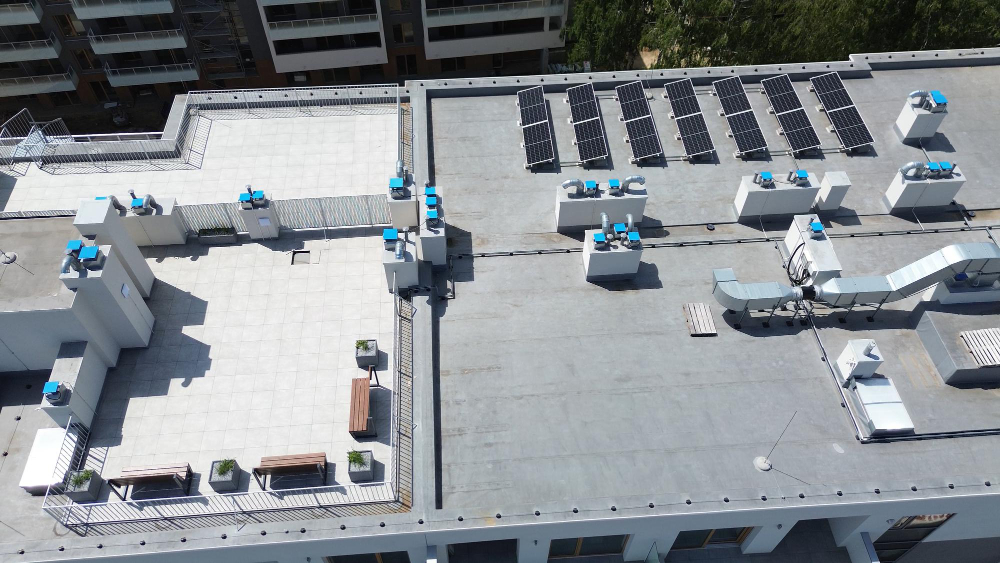
Roofing is the most significant single maintenance cost category in most commercial buildings. Flat roof systems require regular inspection, drainage clearing, membrane integrity checks, and flashing maintenance. A well-maintained commercial roof lasts 20 to 30 years. A neglected one fails in 10 to 15, at a replacement cost that is often the largest single capital expenditure in a building's history.
Roof and HVAC maintenance are the two areas where consistent preventive attention has the highest return on investment.
HVAC systems
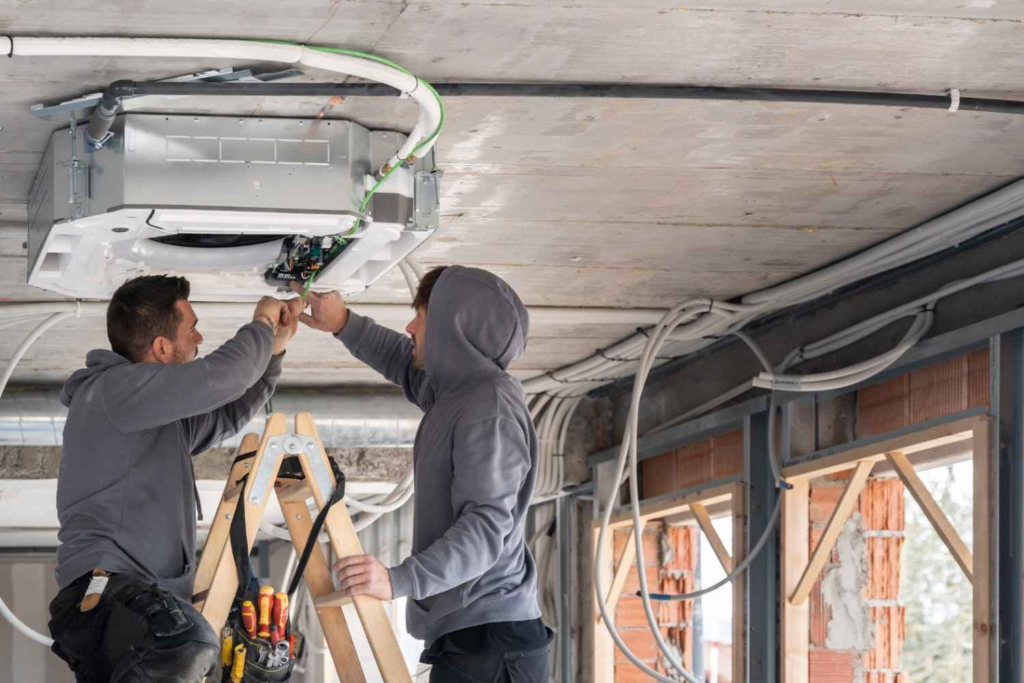
Commercial HVAC systems run continuously. Filters need regular replacement. Coils need cleaning. Belt drives need tension checks and replacement. Refrigerant levels need verification. Controls need calibration. These are not dramatic tasks. But when any of them are neglected, system performance drops, energy costs rise, and component lifespans shorten significantly.
A proactive commercial HVAC maintenance program typically includes quarterly filter changes, bi-annual full system inspection, and annual professional servicing of major equipment.
Electrical systems
Commercial electrical systems require periodic infrared scanning to identify hot spots at connections and components before they become fire hazards or failures. Panel inspections, lighting system maintenance, and emergency system testing are also part of responsible commercial electrical maintenance.
Plumbing systems
Water damage is one of the most common and expensive sources of commercial building damage. Regular inspection of supply lines, drainage systems, water heating equipment, and any specialty plumbing for food service or industrial use prevents the small leaks and failures that cause large losses.
Exterior elements
Parking lots, walkways, exterior cladding, windows, and doors all deteriorate under weather exposure. Sealing, painting, caulking, and surface maintenance are far less expensive than the structural remediation that follows when exterior systems are allowed to fail.
Building systems longevity depends on addressing all of these systems regularly, not just the ones that are visually obvious.
Building a Maintenance Plan That Actually Gets Done
A maintenance plan that exists in a spreadsheet but is not executed is not a maintenance plan. It is documentation of good intentions.
Effective commercial facility maintenance requires:
A complete system inventory
You cannot maintain what you have not documented. Every major building system should be inventoried with installation date, expected lifespan, current condition, and next service date. This information drives the maintenance schedule.
Clear responsibility assignment
Every maintenance task needs a responsible party and a due date. Tasks without owners do not get done. In larger organizations, this means defined responsibility between in-house facilities staff and contracted service providers.
Scheduled vs. event-driven tasks
Some maintenance tasks are scheduled, like quarterly filter changes or annual roof inspections. Others are event-driven, like post-storm exterior inspections or post-freeze plumbing checks. Both categories need to be built into the plan.
Budget alignment
Maintenance planning without budget is wishful thinking. Maintenance costs should be projected annually, with capital replacement items identified and funded through reserves. Buildings that are chronically underfunded on maintenance accumulate deferred maintenance at a predictable rate.
Documentation and record-keeping
Service records for every maintenance task create the paper trail that supports asset management decisions, supports lease negotiations, and proves value to future buyers or lenders. Buildings with complete maintenance histories are easier to finance and easier to sell.
How Commercial Building Inspection Supports Long-Term Building Preservation
Even the best maintenance program benefits from periodic independent professional property assessment. Over time, in-house teams can develop blind spots. Conditions change gradually in ways that are not obvious from inside the building. Systems that appear functional may be operating below specification in ways that only detailed testing reveals.
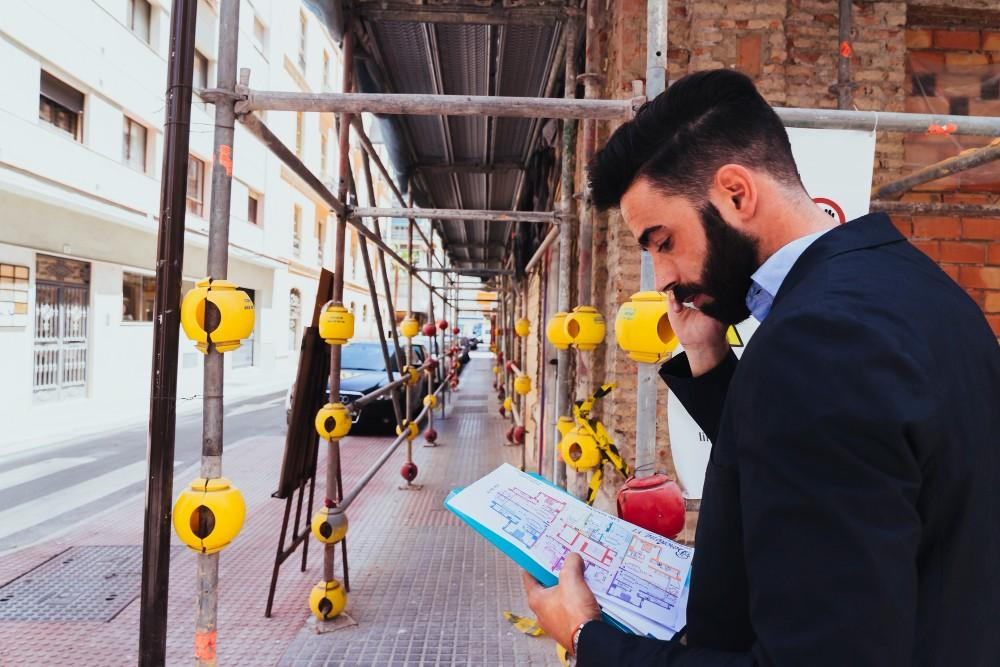
Commercial building inspection in Cincinnati and Dayton Area by an independent inspection company, such as LiteHouse Commercial, provides an objective assessment of building condition that supplements the day-to-day maintenance program. Periodic inspections, every three to five years for well-maintained assets, identify developing conditions before they become major problems and provide documentation of the building's physical condition for asset management purposes.
For buildings being considered for refinancing or sale, an inspection conducted before going to market gives owners advance knowledge of any conditions that would affect a buyer's due diligence, and time to address them on a planned basis rather than under transaction pressure.
Reducing Deferred Maintenance with Building Inspection
If your building already has accumulated deferred maintenance, the practical approach is systematic prioritization rather than trying to address everything at once.
Triage by risk and cost trajectory
Address items that are actively deteriorating fastest first. A failing roof membrane that is allowing water intrusion is a higher priority than a parking lot that needs resealing. Issues that are generating ongoing damage always come before cosmetic or low-urgency items.
Address life safety items immediately
Anything affecting fire suppression, emergency egress, electrical safety, or structural integrity is not deferrable regardless of budget constraints. These items create liability exposure that outweighs the cost of immediate remediation.
Build a multi-year capital plan
Not everything can be addressed in year one. A realistic multi-year capital plan, backed by professional cost estimates, allows owners to plan reserves, communicate with investors or lenders, and make systematic progress on reducing the deferred maintenance backlog without financial shock.
Use inspection findings as the baseline
A professional commercial building inspection provides the detailed deficiency list and cost estimates that are the foundation of a realistic capital plan. Starting from an independent assessment rather than internal estimates gives stakeholders confidence in the plan's accuracy.
LiteHouse Commercial provides inspection services that support exactly this kind of asset preservation planning for commercial property owners and managers in the Cincinnati and Dayton area.
Visit litehousecommercial.com to learn more about how building inspection supports your maintenance and asset management strategy.
Frequently Asked Questions
Q: How do I justify the cost of preventive maintenance to ownership or investors?
Frame it in capital terms. Calculate the current replacement cost of major systems, estimate their remaining useful life under good maintenance versus deferred maintenance conditions, and show the difference in replacement timing and cost. Most major systems last 30 to 50 percent longer under a proper preventive maintenance program than under a reactive-only approach. Extending the useful life of a $200,000 HVAC system by five years has a clear financial value that offsets maintenance costs many times over.
Q: What is the difference between deferred maintenance and capital expenditure?
Deferred maintenance is maintenance that is needed but has not been done, resulting in ongoing deterioration. Capital expenditure is planned replacement or improvement of building systems at or near end of useful life. The distinction matters for accounting, budgeting, and asset reporting purposes. Deferred maintenance is also a red flag for lenders and buyers because it indicates the property has not been managed responsibly. A well-maintained building has capital expenditures planned and funded. A poorly maintained one has deferred maintenance accumulating as an undisclosed liability.
Q: How often should major commercial building systems be professionally inspected?
Annual inspection is recommended for HVAC and plumbing systems. Roof systems benefit from bi-annual inspection, particularly in climates with winter ice and snow. Electrical systems should have infrared scanning every three to five years. For the building as a whole, a comprehensive property condition assessment every five years provides a full physical condition baseline that supports capital planning and asset management decisions. More frequent building inspection is appropriate for older buildings or those with a history of maintenance issues.