Fire protection systems don't announce when something's wrong. That's the whole point of inspections.
A sprinkler head that's been painted over. An alarm that's lost its connection to the panel. A control valve that someone closed and never reopened. None of these announce themselves. But a trained inspector will find every single one.
Fire protection system inspections exist because the people inside a building are counting on every component to work correctly when it matters most. That's not a small responsibility.
Here's what this blog covers:
- What inspectors actually look for during a fire protection inspection
- The sprinkler components that get checked most closely
- How fire alarm systems are evaluated
- What compliance requirements apply to commercial buildings
- How we support building owners and managers
What Happens During Commercial Fire Protection Systems Inspections
An inspection isn't a casual walkthrough. It's a systematic evaluation of every component in the fire protection system against the relevant code standards.
The primary standards governing commercial fire protection systems inspections in the USA are NFPA 25 (for water-based suppression systems) and NFPA 72 (for fire alarm systems). Local fire codes and the Authority Having Jurisdiction (AHJ) layer additional requirements on top of those.
Inspectors are verifying two things. First, that each individual component is in proper working condition. Second, that the overall system will respond correctly in an emergency.
Both matter. A system where every individual component passes but the components don't communicate correctly is still a system that can fail.
Sprinkler System Components That Inspectors Evaluate Closely
The sprinkler system has a lot of pieces. Here's what gets scrutinized during a thorough commercial sprinkler inspection.
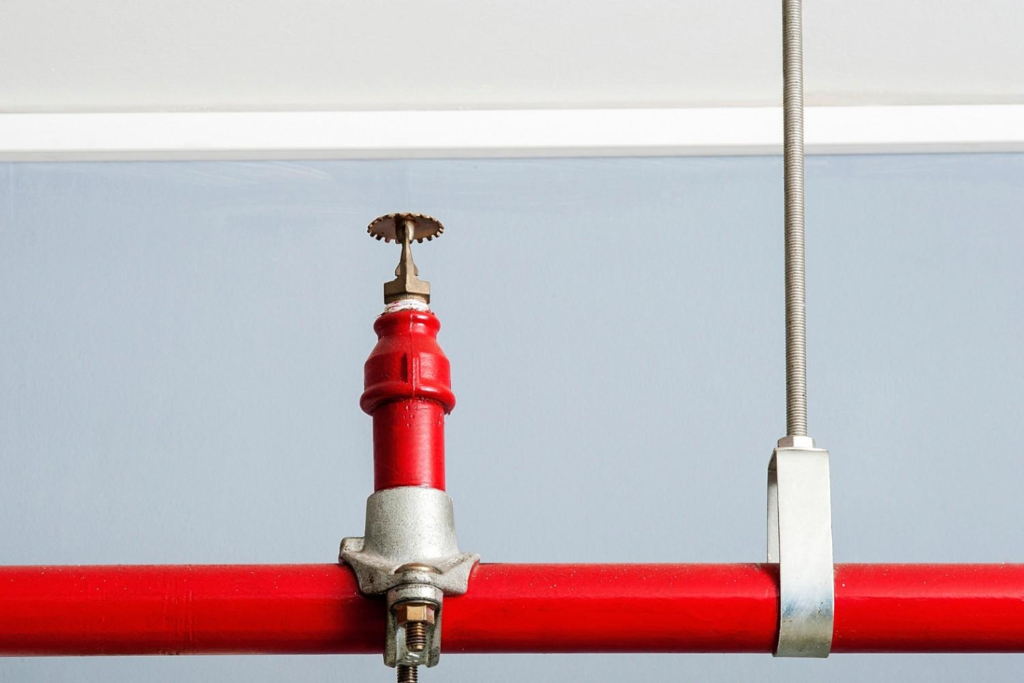
Sprinkler heads –Every head is checked for physical condition, correct orientation, adequate clearance from obstructions, and whether the deflector is free of paint, corrosion, or debris. An impaired, damaged, or non-compliant sprinkler head is a failed component.
Control valves –Every control valve in the system must be in the open position and accessible. A closed or partially closed valve can prevent water from reaching the affected zone. Inspectors verify valve position and confirm they're properly locked or supervised.
Water pressure and flow – The system has to deliver water at adequate pressure and flow rate to control a fire. Inspectors verify that the supply is within design parameters, which often involves conducting or reviewing flow tests.
Pipes and fittings – Corrosion, leaks, mechanical damage, and improper supports are all checked. Piping that's been modified without proper documentation raises immediate concerns.
Gauges –Pressure gauges must be within operational range and visible. Failed or out-of-range gauges prevent building managers from quickly assessing system status.
Inspector's test valve – This valve is used to simulate the activation of the most remote sprinkler head in the system. Running water through the inspector's test valve confirms that the alarm signal triggers correctly when the system activates.
Spare sprinkler heads and tools – NFPA 25 requires buildings to maintain a stock of spare sprinkler heads that match what's installed, along with the wrench required to install them. Many buildings miss this requirement.
What Fire Alarm System Inspections Cover
Fire alarm inspections are more electronics-heavy than sprinkler inspections, but they're no less detailed.
Control panel – The fire alarm control panel is the brain of the system. Inspectors check for any trouble conditions, verify that all zones are reporting correctly, and confirm that battery backup is functional and holding charge.
Initiating devices – These are the components that detect fire, including heat detectors, smoke detectors, pull stations, and sprinkler flow switches. Devices are tested according to NFPA 72 requirements and local code.
Notification appliances –Horns, strobes, and speakers all need to activate correctly when the alarm is triggered. Inspectors verify audibility levels and confirm that visual notification devices meet the requirements for occupancy type.
Monitoring connection –Most commercial fire alarm systems are required to report to a central monitoring station. Inspectors verify that the communication link to monitoring is active and functional.
Wiring and connections – Damaged wiring, loose connections, and unauthorized modifications are all inspection concerns. A fire alarm that works during normal conditions but has compromised wiring can fail during an actual fire.
Battery backup – The system needs to function during a power outage. Battery condition and charge capacity are verified as part of fire alarm system inspections.
Fire Safety Compliance Inspections: What the Frequency Requirements Look Like
Fire protection systems inspections aren't one-time events. NFPA standards establish specific inspection frequencies for different components. Apart from NFPA, there might be other standards to follow as well, such as IFC, IBC, OSHA, and state/local amendments.
For sprinkler systems:
- Monthly: visual check of gauges and control valves
- Quarterly: additional checks including waterflow alarm devices and supervisory signals
- Annually: full inspection including flow tests, main drain tests, and comprehensive head inspection
- Five-year: internal pipe inspection for certain system types
For fire alarm systems:
- Annually: full functional test of all devices (some jurisdictions require semi-annual testing)
- Quarterly or semi-annually: testing of certain initiating devices depending on system type and occupancy
The specific frequency for any building depends on the system type, occupancy classification, and local fire code requirements. Fire safety compliance inspections that don't follow the correct schedule are still a compliance failure even if every component passes.
Early Hazard Detection: Why Routine Inspection Catches Problems Invisible to Building Staff
Building staff interact with fire protection systems every day without noticing most of what an inspector would catch.
A sprinkler head near a storage room that's gradually been obstructed as shelving has crept closer. A smoke detector in a break room that's been disabled because it kept triggering from cooking. A pull station that was damaged by a cart and never reported because it wasn't obviously broken.
Routine fire safety maintenance through scheduled professional inspections creates a consistent mechanism for catching these accumulating problems before they become failures.
Our property inspectors are trained to evaluate fire protection systems the way an inspector should: systematically, thoroughly, and without assumption that what looks intact actually is.
What Happens When a System Fails an Inspection
Not every inspection ends with a clean pass. When deficiencies are found, the inspector documents them in a report that categorizes each finding.
Immediately dangerous conditions require the building owner to take action before the inspector leaves. A completely non-functional alarm system or a control valve in the closed position with no explanation falls into this category.
Priority deficiencies need to be corrected within a specified timeframe and a reinspection is required to confirm correction.
Non-priority observations are conditions that should be addressed but don't represent an immediate compliance failure.
The inspection report becomes a compliance document. Insurance carriers, fire marshals, and property managers all rely on these records.
Commercial Property Protection Through Proper Documentation
One of the often-overlooked values of regular fire protection systems inspections is the documentation trail.
When a fire occurs, the investigation looks at the fire protection system's maintenance history. An insurance claim following a fire in a building where inspections were overdue faces complications. Liability for harm to building occupants can be significantly more serious when proper inspection records don't exist.
At LiteHouse Commercial Property Inspections, we provide thorough documentation with every inspection. Building owners and managers get a clear, complete record of what was inspected, what passed, what failed, and what was done about it.
That documentation matters in normal operations and becomes critically important if something ever goes wrong.
How We Handle Fire Protection Inspections
We conduct commercial fire protection services in Cincinnati and Dayton Area with a focus on thoroughness, accuracy, and clear reporting.
Our property inspectors know NFPA 25 and NFPA 72 requirements, understand local fire code variations, and work efficiently in occupied commercial buildings without disrupting daily operations.
We work with building owners, property managers, and facilities teams to set up inspection schedules that meet code requirements and keep documentation current.
If a building's fire protection systems inspections are overdue, or if a more reliable inspection partner is needed, we'd welcome the conversation.
Visit litehousecommercial.com to learn more.
Final Thoughts
Fire protection systems inspections protect buildings and the people inside them. The components being tested represent the last line of defense in an emergency.
At LiteHouse Commercial, we take that seriously. Thorough, documented, code-compliant inspections are what we deliver on every visit.
FAQs
Q: What happens if a fire protection system doesn’t pass inspection?
If the inspector finds a problem, it gets written into the inspection report along with how urgent the issue is. Some things just need fixing soon, while more serious problems may need immediate attention. The building owner is told what needs to be corrected and what the next steps are. After the repairs are done, another inspection is usually arranged to make sure everything is compliant again.
Q: Do fire protection system inspections in the USA have to be done by a licensed contractor?
In many places, yes, but the rules aren’t exactly the same everywhere. Some states require inspectors to have certain certifications, and some require the company itself to be licensed too. Before hiring anyone, building owners usually check that the company is properly qualified for that state or city.
Q: Can inspections be done outside normal business hours?
A lot of the time they can. Some buildings prefer evening or weekend inspections so there’s less disruption during working hours. It really depends on the building and whether the inspection team can access everything they need at those times. Usually, it’s just something arranged in advance with the inspection company.